




The beginning of time.
The October meeting of Keighley Astronomical Society was held on Thursday 22nd. We welcomed Mr Roy Gunson from the Mexborough and Swinton Astronomical Society, for a presentation titled “The Beginning of Time”. The story of how mankind eventually discovered age of the universe. Mr Gunson guided the members present through human history and right up to the present day.
The presentation was divided into two sections. The first being how the age of the Earth was attained and the second was determining the age of the universe.
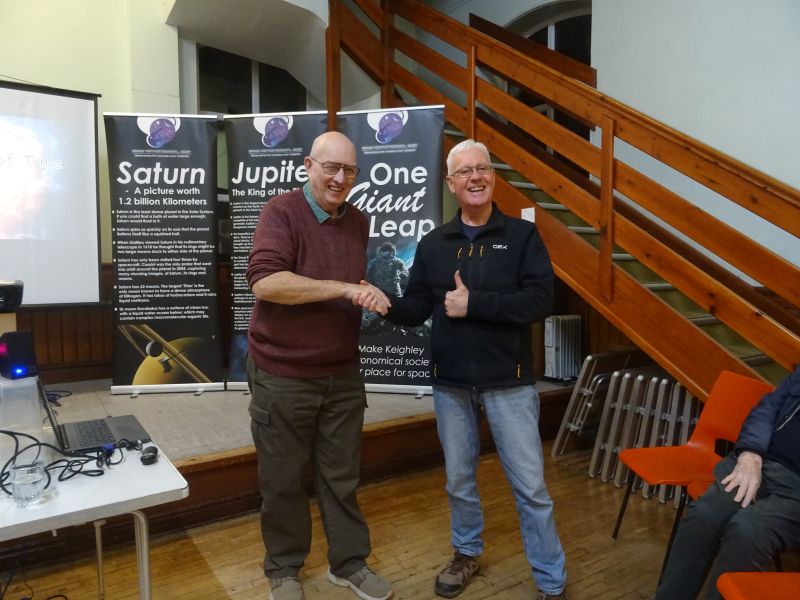
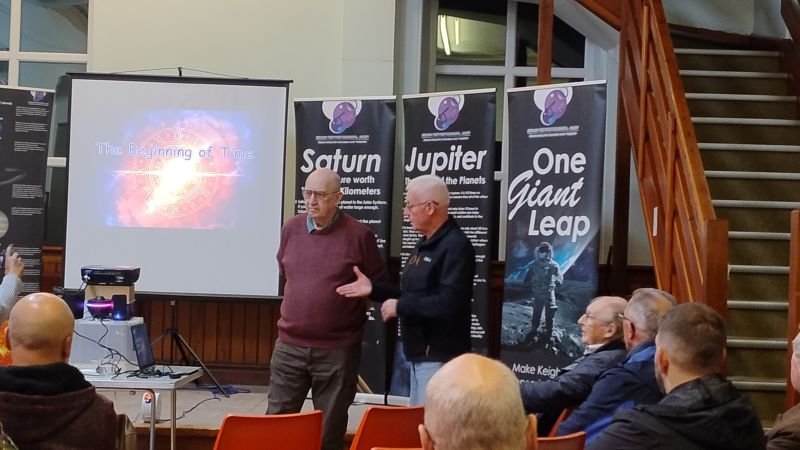
Mr Roy Gunson is welcomed to deliver his lecture to members of Keighley Astronomical society.
Mr Gunson described the creation myths of the major ancient cultures and civilisations from the Australian aborigines to the ancient Greeks.
Indigenous Australian peoples do not view the creation of the universe as a singular, distant event in the past. Instead, they understand creation through The Dreaming often mistranslated as the “Dreamtime”
The ancient Greeks believed the universe began from Chaos, a vast, dark, empty void, which gradually gave order to the cosmos through successive generations of primordial entities, Titans, and Olympian gods.
This foundational myth was most famously recorded by the poet Hesiod in his 8th-century BCE epic poem, the “The Ogony”.
The Norse creation saga, primary recorded in Snorri Sturluson’s 13th-century Prose “Edda” outlines a universe born from the violent confluence of elemental opposites: ice and fire. Unlike creation myths that feature a peaceful molding of the earth by a benevolent creator, the Norse cosmos was forged from a primordial void through a bloody act of divine execution.

The Norse god Odin looks out over the world he has created with his brothers.
What does the Bible say on the creation of the universe? Asked Mr Gunson.
He explained that the biblical perspective on creation breaks down into several core themes:
1 The Initial Act of Creation
The very first verse of the Bible establishes God as the source of all existence: “In the beginning, God created the heavens and the earth” (Genesis 1:1). The phrase “the heavens and the earth” is a Hebrew idiom (a merism) meaning the entirety of the universe—everything that exists.
2. Creation by the Spoken Word
A recurring theme in both the Old and New Testaments is that God did not fashion the universe with physical hands, but rather commanded it into existence:
The Spoken Word: “By the word of the Lord the heavens were made, and by the breath of his mouth all their host… For he spoke, and it came to be; he commanded, and it stood firm” (Psalm 33:6, 9).
The Living Word: “In the beginning was the Word… All things were made through him, and without him was not any thing made that was made” (John 1:1,3)
The Sustainer: “For by him all things were created, in heaven and on earth, visible and invisible… all things were created through him and for him. And he is before all things, and in him all things hold together” (Colossians 1:16–17).
3.The Six Days of Creation and Rest
Genesis 1 details how God transformed a “formless and empty” space into a structured, habitable world over a period of six “days” (which some interpret as literal 24-hour periods and others as longer epochs).
Day 1: Light (separating light from darkness).
Day 2: The expanse/sky (separating the waters above from the waters below).
Day 3: Dry land and vegetation.
Day 4: The sun, moon, and stars to mark time, seasons, and days.
Day 5: Sea creatures and birds.
Day 6: Land animals and human beings, made uniquely in the image of God.
Day 7: God rested, blessing the seventh day and setting it apart as holy
5.The Purpose of the Universe
According to scripture, the universe acts as a massive display of God’s character. Psalm 19:1 states, “The heavens declare the glory of God, and the sky above proclaims his handiwork”. The Bible argues that by looking at the vastness and complexity of the cosmos, humans can clearly perceive God’s eternal power and divine nature.
In Islamic tradition, the story of creation is not detailed in a single chronological chapter but is woven throughout various verses of the Quran and expanded upon in Hadith literature, philosophical essays, and historical accounts like the Qiṣaṣ al-Anbiyāʾ’(Stories of the Prophets).
The Islamic accounts of creation dictate that Allah (God) brought the universe into existence through his absolute will and command, “Kun” (“Be”), organising a cosmic order out of smoke and water in six days.
But what about an actual investigation and calculation as to when the Earth and or when the Universe began, asked Mr Guson?
So what is the age of the Earth or the age of the universe?
How can it be calculated or discovered?
According to the traditional rabbinic calculations used in the Hebrew calendar, the current year is AM 5787 (Anno Mundi, meaning “in the year of the world”), which places the biblical creation of the Earth in the year 3761 BCE.
The calendar’s epoch (start date) was calculated primarily by the 2nd-century sage Rabbi Jose ben Halafta in a text called Seder Olam Rabbah. He arrived at this timeline by working backward from known historical events, such as the destruction of the Second Temple, and adding up the strict text of the Torah, including:-
The genealogies in Genesis (adding up the ages of patriarchs when their children were born).
The lengths of reigns of the kings of Israel and Judah.
The 6 days of creation, which the traditional calendar counts as literal 24-hour periods preceding the creation of Adam.
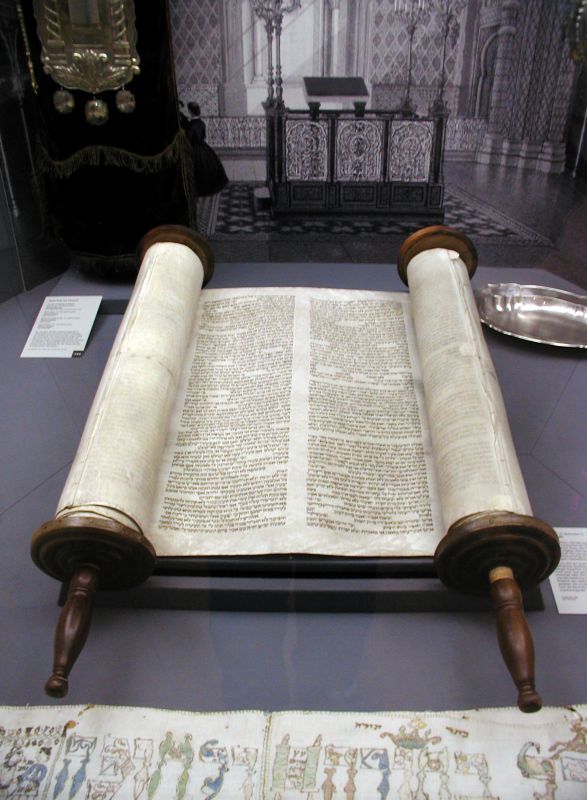
A sefer torah
The Byzantine calendar sets the creation of the world at 5,509 BC (specifically placing the start of Year One on 1st September 5509 BC). To find the age of the earth in any given year, you add 5,509 years to the current AD/CE year (or 5,508 if the date falls before 1st September, when the Byzantine New Year began).
Unlike Western Christian calendars that relied on the Hebrew Masoretic text (which calculated creation around 4000 BC), the Byzantine system derived its chronology from the ‘Septuagint’ (an early Greek translation of the Old Testament).
Scholars added up the lifespan of Adam and the generations of biblical patriarchs listed in Genesis, combined with the first five days of creation leading up to Adam’s formation.
The Incarnation Offset: The system placed the birth of Jesus Christ (the Incarnation) in the year 5509 of the Anno Mundi (“Year of the World”) era.
Dennis the Short, c470 to c544
Dennis (better known by his Latin name, Dionysius Exiguus) did not actually calculate the age of the Earth. Instead, he is famous for inventing the Anno Domini (AD) calendar system, which anchors our timeline to the birth of Jesus Christ rather than the creation of the world or the reigns of emperors.
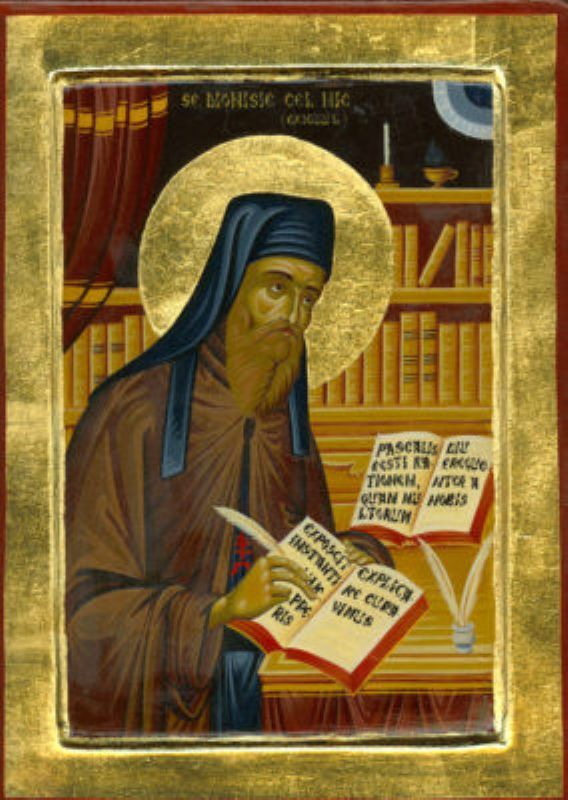
Dionysius Exiguus (c. 470 – c. 544), also known in English as Dennis the Short or Dennis the Humble, was a 6th-century Eastern Roman monk from Scythia Minor (modern Romania and Bulgaria) who lived and worked in Rome.
However, his work had a major impact on how early societies viewed the age of the Earth, and it influenced later scholars who did try to calculate it.
Before Dionysius introduced his system in 525 AD, many Christian chronologists used the Anno Mundi (AM) system. They calculated the age of the Earth by adding up the lifespans and generations recorded in the Old Testament, usually concluding that the world was created around 5500 BC.
By creating the Anno Domini system, Dionysius reset the focus of time-keeping. Shifting the calendar to count forward from the Incarnation of Christ effectively defused these countdowns and uncoupled the civic calendar from the estimated age of the world.
Centuries later, scholars used Dionysius’s AD framework to work backward and calculate a specific date for creation. The most famous of these was Irish Archbishop James Ussher.
Around AD 725, the Anglo-Saxon scholar and monk the Venerable Bede completed his foundational treatise, ‘De temporum ratione’ (On the Reckoning of Time). In this text, he did not use the Metonic cycle directly to measure geology, but rather used it as the mathematical backbone to standardise the calendar, which allowed him to recalculate the date of Creation to 3952 BC. Thus establishing the age of the Earth at roughly 4,677 years old during his time.
Bede used his precise calendrical framework to re-examine the timelines, but he switched his source text to Jerome’s Latin Vulgate, which was translated directly from the original Hebrew text. The Hebrew genealogies listed shorter lifespans for the biblical patriarchs.
By using the Metonic cycle to perfect the calendar and shifting to the Hebrew text, Bede successfully “rewound” the clock. His calculation did two major things: it gave medieval Europe an authoritative age for the Earth, and it safely pushed the feared 6,000-year apocalyptic deadline more than a thousand years into the future, defusing widespread millennial panic. His work also popularised the AD (Anno Domini) dating system we still use today.
James Ussher 1581 to 1656
James Ussher, was one of the very first students at Trinity College. He was born in Dublin and came to study at at the college in 1594, a year after the college opened its doors, when he was just 13. He later became the Archbishop of Armagh. Archbishop James Ussher managed to be a friend to both Charles I, and to Oliver Cromwell, which was quite an achievement. He is buried in London’s Westminster Abbey. He bequeathed his book collection to his old college, and it formed the start of Trinity’s great library.
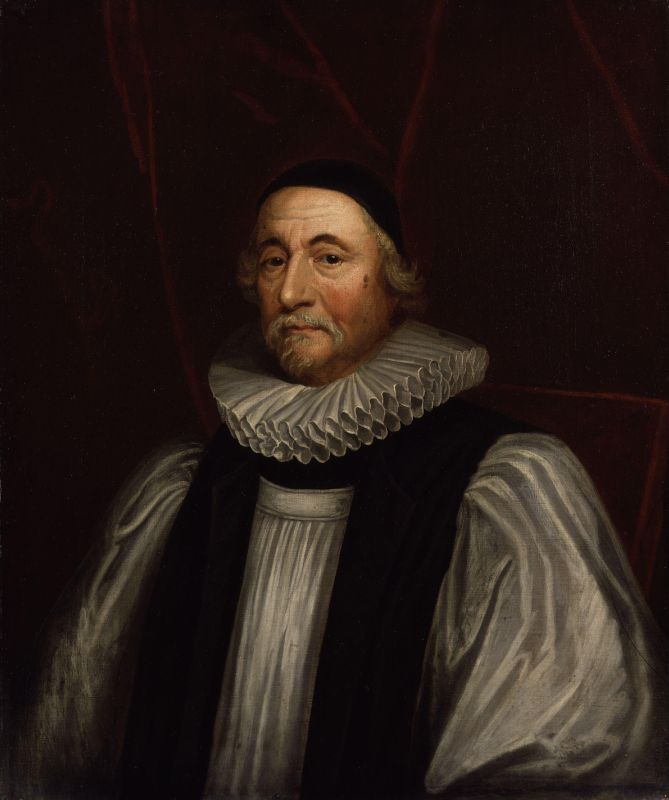
James Ussher (4 January 1581 – 21 March 1656) was an Anglo-Irish Anglican clergyman, scholar, and the Church of Ireland Archbishop of Armagh and Primate of All Ireland from 1625 to 1656.
The world began on this day 4004 BC, according to Archbishop James Ussher, the man who famously calculated the date of the Creation by counting the ‘begats’ in the Old Testament. But his work meant this ingenious Irish ‘scientist’ was also one of the first people to try and estimate the age of the Earth. In the early 1600s, Ussher spent years painstakingly calculating the date, using copious sources of information, not just the Old Testament: he also studied ancient Egyptian and Hebrew texts, analysed how ancient calendars were devised, and consulted with astronomers. He concluded that the world began at the start of the autumn equinox (October 23rd in the old calendar) in the year 4004 BC. Today, people often laugh at Ussher’s calculation. Yet, it was the height of scientific scholarship for its time, and Ussher was using all the available evidence.
Ussher was not alone in his calculation. Many other famous scholars were doing the same thing. Newton and Kepler both reckoned the creation took place about six years earlier, around 3998 BC.
John Lightfoot, an eminent Hebrew scholar at Cambridge, thought it was 80 years before that. And there were heated arguments about whose date was correct!
The calculation they were doing was called the Chronology, and the scientists didn’t just calculate the date for the Creation, they also calculated dates for other biblical events.
Ussher reckoned that Noah’s Flood happened in the year 2348 BC, for instance, and the Exodus from Egypt in 1491 BC.
The reason Ussher’s chronology is so well known, rather than any of the others, is because his was used in printed English bibles, given the same respect as the Scriptures, and widely accepted until the late 1800s.
Other persons who calculated the date of creation:-
Tomas Burnet – 1635 to 1715
Isaac Newton – 1643 to 1727
Edward Lhuyd – 1660 to 1709
John Woodward – 1665 to 1728
Edmund Halley – 1656 to 1742
Benoit De Maillet – 1656 to 1738
George Louis leclerc de Buffon – 1707 to 1788
William Smith – 1769 to 1839
Charles Dawin – 1809 to 1882
John Philips – 1800 to 1874
Leonard Horner – 1785 to 1864
William Thompson (Lord Kelvin) – 1824 to 1907

Issac Newton (1643 to 1727). Newton viewed the universe as a clockwork mechanism that was created and set into motion by God, and his work focused on how it operated rather than how it began.
Ernest Rutherford and Bertram Boltwood
The teamwork between physicist Ernest Rutherford and radiochemist Bertram Boltwood radically altered humanity’s understanding of the timeline of creation by pioneering radiometric dating, proving that the Earth was billions of years old.
Before their breakthroughs in the early 1900s, estimates of the Earth’s age (“creation”) were highly contested. Biblical chronologies placed it at roughly 6,000 years old, while leading physicists like Lord Kelvin used thermodynamic calculations of the Earth’s cooling rate to cap its age at 20 to 100 million years.
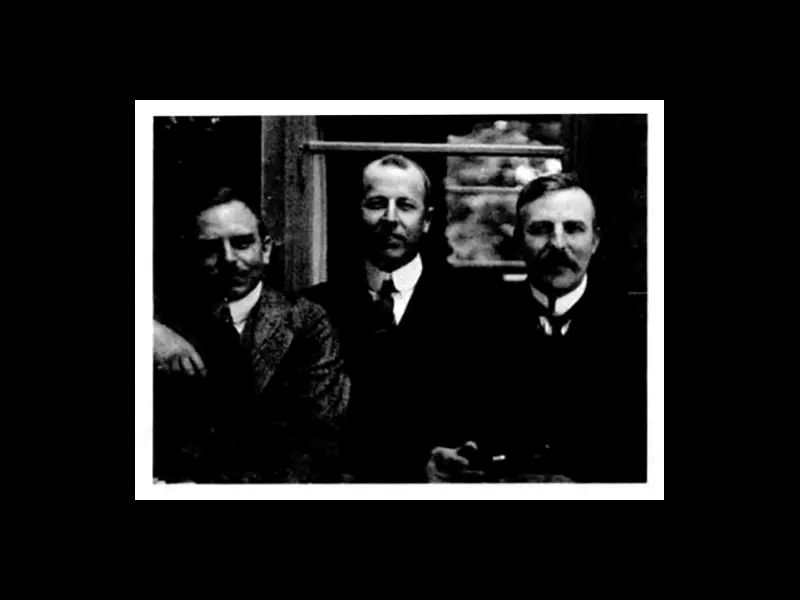
Otto Hahn (1879 to 1960) on the left. Betram Boltwood (1870 to 1927) centre. Ernest Rutherford (1871 to 1937) on the right.
Rutherford and Boltwood bypassed assumptions about ancient conditions entirely by introducing a natural, atomic clock. They achieved this through two critical phases:-
1 Rutherford and Soddy: The Discovery of the “Atomic Clock”
In 1902, Ernest Rutherford and Frederick Soddy discovered the law of radioactive decay. They proved that radioactive elements are unstable and spontaneously break down into other elements in a highly predictable sequence (a decay series) at a completely fixed rate, known as a half-life.
2 Boltwood’s Masterstroke: The Uranium-Lead Connection
Bertram Boltwood, a Yale professor collaborating closely with Rutherford, noticed something else: lead was always present in uranium ores. Following Rutherford’s broader suggestions, Boltwood deduced that lead was the final, stable “daughter” element left behind once a uranium atom finished its long decay chain. Because lead is a solid metal, it stays locked inside the rock matrix forever, unlike leaky helium gas.
By demonstrating that certain rocks had existed for billions of years, Rutherford and Boltwood provided the first definitive proof that the creation of the Earth happened on a vast, deep-time scale. This shattered Lord Kelvin’s limits, aligned perfectly with the time scales required for Charles Darwin’s theory of evolution, and laid the exact foundational framework scientists still use to date the Earth at its modern estimate of 4.54 billion years.

So far we have only talked about the age of the Earth Mr Guson pointed out
What about the universe? lets slip back in time a little he said.
What can the speed of light tell us? Asked Mr Gunson
The speed of light acts as a cosmic time machine,explained Mr Gunson, allowing astronomers to look back in time and determine that the universe is approximately 13.8 billion years old. Because light travels at a constant, finite speed (\(299,792\text{ km/s}\)), the farther away an object is, the longer its light takes to reach Earth.
The speed of light helps calculate the age of the universe through three primary concepts:-
1. The Cosmic Time Machine
When we observe distant celestial objects, we do not see them as they are today, but as they were when the light left them.
The Moon: We see it as it was 1.3 seconds ago.
The Sun: We see it as it was 8 minutes ago.
Distant Galaxies: We see them as they were billions of years ago.
By measuring the distance to the farthest visible objects, scientists can establish a strict minimum boundary for how long the universe must have existed for that light to reach our telescopes.
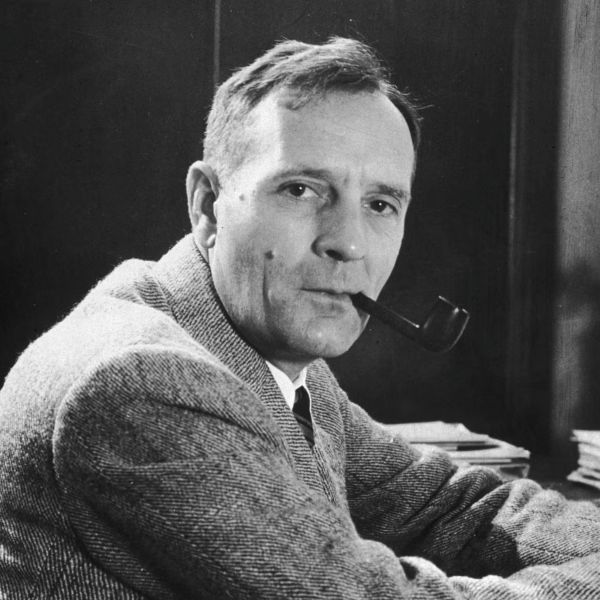
Edwin Powell Hubble (1889–1953) was a revolutionary American astronomer who fundamentally changed our understanding of the universe by proving that the Milky Way is not alone and the universe is expanding. He is widely regarded as the leading observational cosmologist of the 20th century.
2. Measuring Cosmic Expansion (The Hubble Constant)
Calculating the absolute beginning of time (the origin of the universe itself) required understanding that space is not static, a concept born from Albert Einstein’s general theory of relativity.
Lemaître and the “Primeval Atom”: In 1927, Belgian priest and astronomer Georges Lemaître used general relativity equations to propose that the universe was expanding and must have originated from a single, dense point;what he called the “Primeval Atom”.
In the 1920s, Edwin Hubble discovered that distant galaxies are moving away from us, meaning the universe is expanding. By using the speed of light to measure the distances to these galaxies and tracking how fast they are moving, scientists can “rewind” the expansion.
The Analogy explained Mr Gunson is If you see a car driving away from a starting point at a known speed, you can calculate exactly when it began its journey.
The Calculation: Dividing the distance to a galaxy by its recessional velocity yields a value known as Hubble Time, which provides a foundational baseline for the age of the universe.
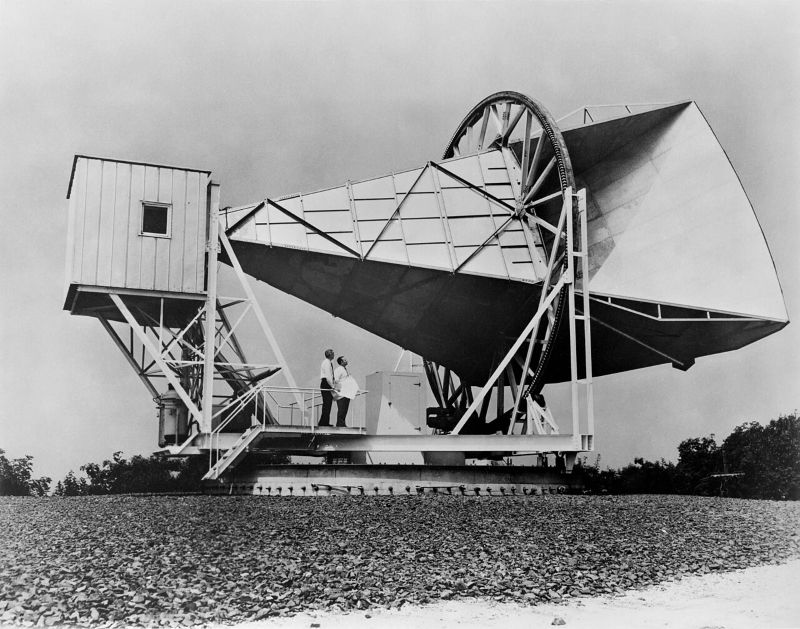
The Cosmic Microwave Background (CMB) radiation (the ancient thermal afterglow of the Big Bang) was accidentally discovered in 1964 by two radio astronomers, Arno Penzias and Robert Wilson, while working at Bell Telephone Laboratories in Holmdel, New Jersey. They were utilizing a highly sensitive, 20-foot Holmdel Horn Antenna to map radio signals from the Milky Way galaxy. However, whenever they pointed the telescope at blank patches of sky, they encountered a persistent, low-level background hiss in the microwave spectrum. The background noise refused to disappear. It remained perfectly uniform regardless of the time of day, season, or the direction the antenna was pointed.
3. The Ultimate Limit: The Cosmic Microwave Background
The oldest light we can detect is the Cosmic Microwave Background (CMB), the leftover radiation from the Big Bang.
As this light travelled across the expanding universe over billions of years, its wavelengths stretched into the microwave spectrum.
Space missions like NASA’s Wilkinson Microwave Anisotropy Probe (WMAP) and the European Space Agency’s Planck Satellite mapped this radiation with extreme precision. By analysing the patterns in the CMB alongside the precise speed of light, physicists calculated that this light has been travelling for 13.787 billion years (with a margin of error of less than 1%), pinpointing the exact moment the universe became transparent.
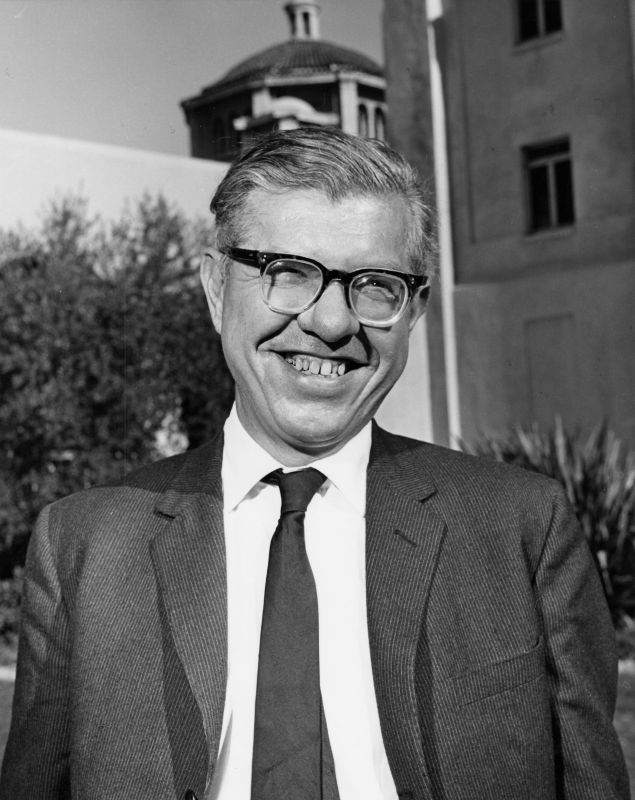
Sir Fred Hoyle (24 June 1915 – 20 August 2001). Hoyle used the term ‘The Big Bang’ during a BBC Radio broadcast in March 1949 (and repeated variations of it in subsequent lectures/broadcasts). Although he didn’t believe in the theory, he believed in the steady state theory of the universe.
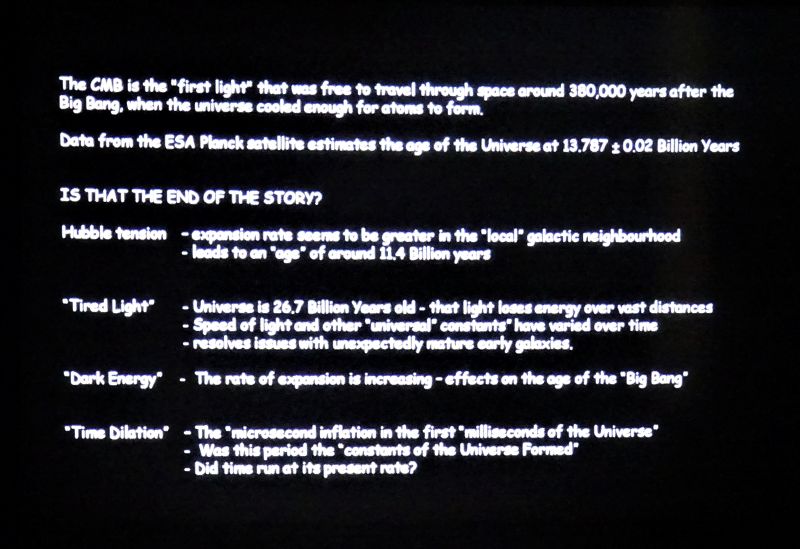
The cosmic background radiation is the first light that was free to travel through space around 380,000 years after the Big Bang, when the universe cooled enough for atoms to form.
Data from the ESA Plank satalite estimates the age of the universe at around 13.787 Billion years.
Is that the end of this story? Pondered Mr Gunson
What about Hubble Tension?
What about Tired light?
What about Dark Energy?
What about Time dilation?
To Finish, We have the Earth as around 4.5 Billion years old
The Big Bang may have been 13.8 Billion years ago
I hope this story has ended with a bang and not a whimper, said Mr Gunson.
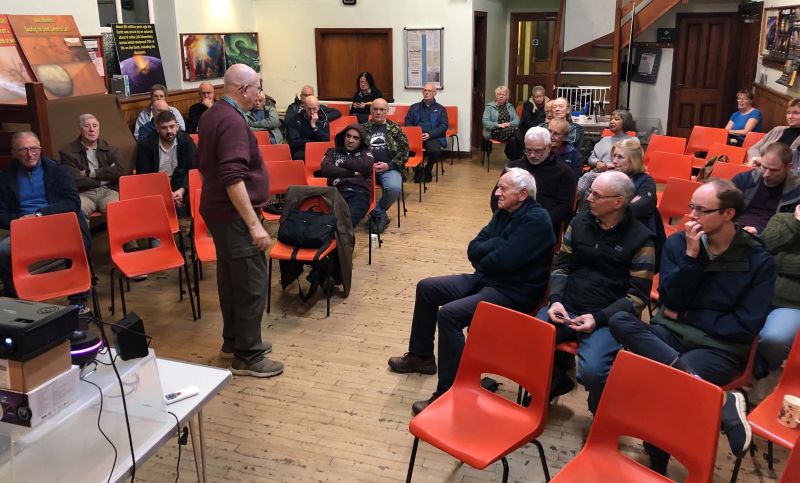
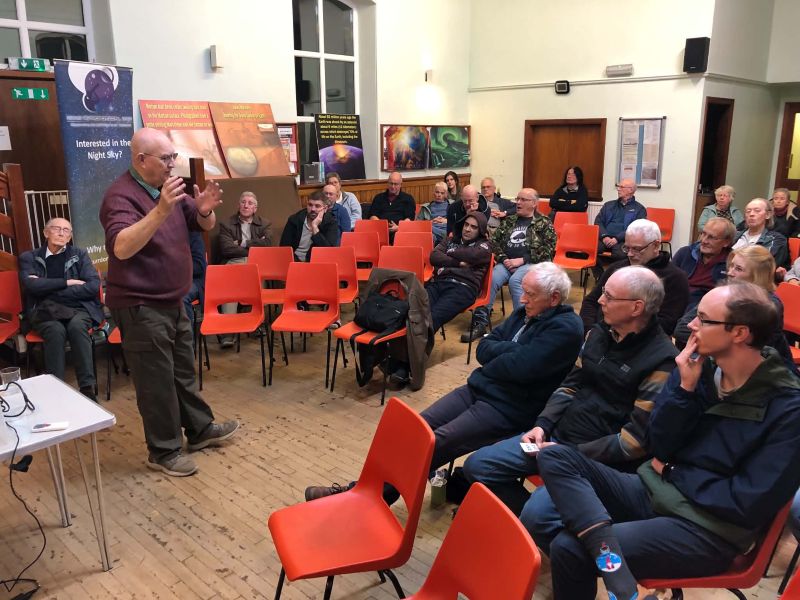
Mr Gunson ended his evening by answering questions from raised by society members in the hall.
Keighley Astronomical Society extends thanks to Mr Roy Gunson for delivering an evening that was as informative as it was inspiring, and to Mr Gunson for taking the time an effort to travel to us.
Presentations like this remind us why we gather; to share curiosity, argue gently with the cosmos, and leave with slightly larger minds than we arrived with.

The speed of light acts as a cosmic time machine because its constant speed means looking farther into space is literally looking backward in time. By combining this “lookback time” with the rate at which the universe is expanding, cosmologists can run the cosmic clock backward to calculate exactly when everything started.
Here is how scientists use the speed of light to calculate that the universe is 13.8 billion years old: