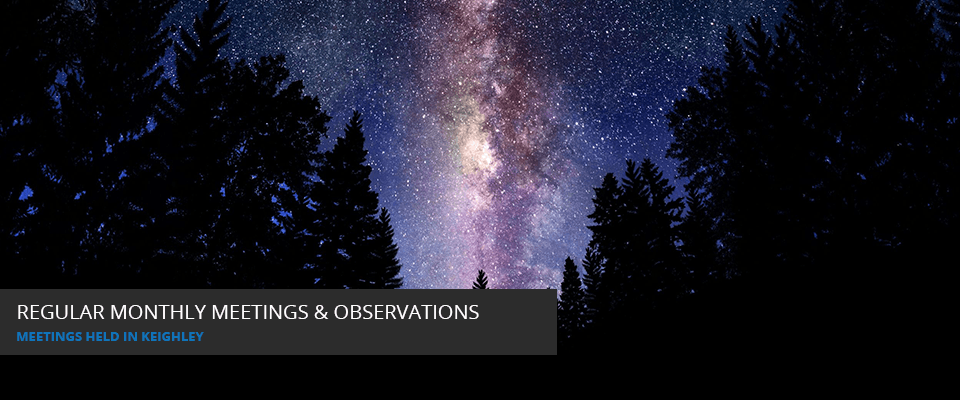
As we move into high summer, the sun turns southwards, our nights begin to lengthen and the moonless spell later in the month brings many of us our first dark skies of the summer. The Plough is in the north west as the Summer Triangle reaches the high meridian. Formed by the bright stars Vega, Altair and Deneb, in the constellations Lyra,...
Read MoreBipolar magnetic regions on the Sun
The centre of our solar system was the object in focus at the June meeting of Keighley Astronomical Society. The guest speaker was Mr Kevin Kilburn from Manchester Astronomical Society. His presentation was ‘The bipolar magnetic regions on the Sun’. A relatively unknown aspect of solar study, which has been identified in the past but forgotten...
Read MoreThe June night Sky
June brings our summer solstice on the 21st and sees Jupiter remain as the stand-out object in a night sky that is blighted by persistent twilight at our latitudes. The latter is so severe over northern Britain that it swamps all but the brighter stars and planets. Those bright stars include Vega in Lyra, which is high in the eastern sky, as is the...
Read MoreChildren of the Sun
The guest speaker at the May meeting of Keighley astronomical society was Mr Rod Hine from our neighbours at Bradford Astronomical Society ‘Children of the Sun’, was the title of his presentation. Mr Hine explained that the energy provided by the Sun has to come in the right amount, shape and form to be useful to Life on Earth. Mr Hine had...
Read MoreThe May Night Sky
May is the first month when the constellation of Orion is absent from the night sky altogether, and of the prominent winter stars only Capella in Auriga the Charioteer and Castor and Pollux in Gemini remain above the western horizon. The Plough or Ursa Major (the Great Bear) is still more or less overhead with the pointers pointing to the North...
Read More


