


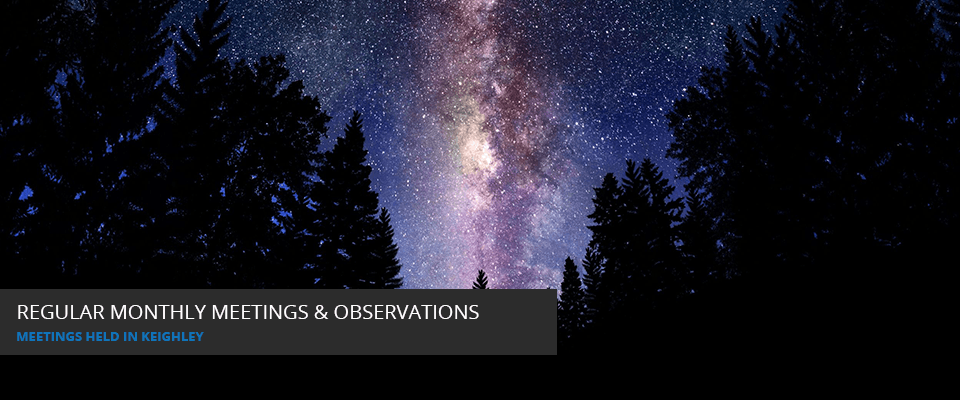



Orion setting
This month will give you a few reasons to celebrate. Spring is on its way. On the 20th we have the vernal equinox. After that date the days become longer than the nights. This is followed on the 29th of March when British summer times starts and it will be around 8 pm before it becomes dark.
The two most brilliant planets Venus and Jupiter, dominate this months evenings, joined by the large spring constellations.
The Constellations:-
The evening sky is transitioning to the stars and constellations that will adorn the heavens for the next few months. So, if you are a fan of Orion and its retinue, get your looks in fast, because those stars will be all but gone by the end of April. Of his retinue, only Capella, Procyon and Gemini are reasonably high up. Ursa Major is practically overhead. Cassiopeia is low in the northern sky, with Vega in the east. The southern sky is dominated by the constellation of Leo, while the brightest star on view is the glorious orange coloured Arcturus, in the constellation of Bootes. The Milky Way is not as conspicuous as in winter.
The Planets:-
MERCURY
On the first couple of evenings of the month, the innermost planet will be just to the right of Venus. Shinning at magnitude +2.4 it will be setting about 7pm. But as the month progresses Mercury quickly sinks into the twilight glow and disappears from view.
VENUS
The brilliant evening star is shinning at magnitude –3.9, low in the west after sunset. Venus falls below the horizon around 7.30pm. The crescent Moon forms a stunning sight with Venus on the 20th of March.
MARS
The red planet is too close to the Sun for observation this month.
JUPITER
The gas giant is resplendent in the evening sky, in the constellation of Gemini. At magnitude –2.3, Jupiter falls below the horizon around 4am. The Moon is just above Jupiter on the 26th of this month.
SATURN
Located in the constellation of Pisces, the ring world lies above Venus, a hundred times fainter at magnitude +1.0. It will be setting around 7.30pm. As the evening star rises in the sky, it passes less than a degree to the right of Saturn on 8th of the month. By the middle of the month Saturn like Mercury has dropped down and out of sight into the Sun’s glare.
URANUS
With a magnitude of +5.8 it is hardly visible to the unaided eye. It can be found in the constellation of Taurus below the Pleiades star cluster. Uranus sets below the horizon about midnight.
NEPTUNE
The outer most planet is just to the right of Saturn, also in the constellation of Pisces. Neptune will be at magnitude +7.8 and you will need a telescope to see it before it falls below the horizon about 7.30pm. As Venus moves upwards in the sky, it passes just 4 arcminutes from Neptune on the 7th of March at 11.30am. This unusual close conjunction of the planets nearest and furthest from the Sun will only be visible from eastern Asia. They will have separated to 20 arcminutes by the time the conjunction can be seen from our part of the world.
PLUTO
Located very low down in the south west in the constellation of Capricornus. At magnitude +14.5, this distance world rises about 5.20am and will be visible until sunrise.
CERES
The largest object in the asteroid belt can be located in the constellation of Pisces this month, very low in the east. At magnitude +9.1, it falls below the horizon just after 9pm.
Special Events:-
2nd March – The almost full Moon is near the star Regulus.
3rd March – A full ‘Blood’ Moon and a total lunar eclipse but sadly noting of it will be visible in our part of the world.
6th March – The Moon is near the star Spica.
10th March – The almost half Moon in passing the star Antares in the early hours of the morning.
20th March – The crescent Moon and Venus form a stunning duo low in the west after sunset.
26th March – Brilliant Jupiter will be just below the half Moon, with the twin stars of Gemini Castor and Pollux.
29th March – The star Regulus reappears from behind the Moon. Now the exact time will depend on your location. Using binoculars, you will see the stars companion, Regulus B (Magnitude +8.1) emerge from the occultation first. It’s followed 6 minutes later by Regulus itself, 500 times brighter at magnitude +1.4.
The phases of the Moon:-
Full Moon 3rd March
Last quarter 11th March
New Moon 19th March
First Quarter 25th March