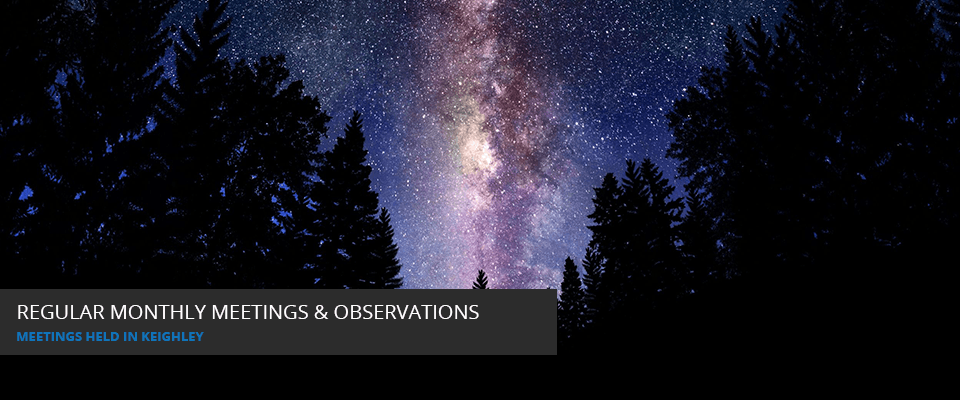
This month sees the biggest and brightest Full Moon of the year. We will have the opportunity to see three Meteor showers and two comets. The Milky Way rises overhead on these dark November nights, providing a stunning inside perspective on the huge Galaxy that is our home in the cosmos. After your eyes have adjusted to the dark you should be able to see...
Read MoreWilliamina Paton Stevens Fleming by Roy Gunson
The guest speaker at the September meeting of Keighley Astronomical society was Mr Roy Gunson from Mexborough & Swinton Astronomical Society. His presentation started on a cold morning in 1857, in Dundee, Scotland, a girl was born who would one day light up the universe; not with a telescope, but with brilliance. Her name was Williamina Paton Stevens...
Read MoreThe September night sky
The Moon grabs all the headlines this month, with a total lunar eclipse on 7th of the month and an occultation of the Seven Sisters on the 12th. Saturn is at its brilliant best all night long. It will be at is closest to the Earth and at its brightest. A low power telescope will reveal Saturn’s famous rings, which are currently appearing almost edge on...
Read MoreThe August night sky 2025
There will be a ‘Glorious Twelfth’ this month, when Venus joins Jupiter for a spectacular conjunction of the two most brilliant planets in the morning sky. Later in the month, the show continues when Mercury and the crescent Moon join them. This month the Milky Way arches overhead this month, looking ever more resplendent as the skies grow darker. Set...
Read MoreThe CISRO Parkes Radio dish and the Siding springs observatory – An Australian Adventure
The June monthly meeting of Keighley Astronomical society was held on Thursday 26th and the guest speaker was a return visit by our good friend Mr Peter Rea FRAS from the Cleethorpes and district Astronomical society. The subject matter of his talk was something different from his previous presentations. Mr Rea tends to talk about the exploration of Space...
Read MoreThe July Night sky
On the 3rd July the Earth is at it’s furthest from the Sun at just over 152 million kilometres away. The full Moon on10th July is called the Buck Moon as it is the time of year that male deer shed their antlers and begin to regrow them in July. Two of the most ancient constellations are at their best this month and as the sky becomes darker and the...
Read More


